
BMS HIL Tester for Electric Vehicle Batteries
Validation of ECU logic, cell monitoring and safety functions
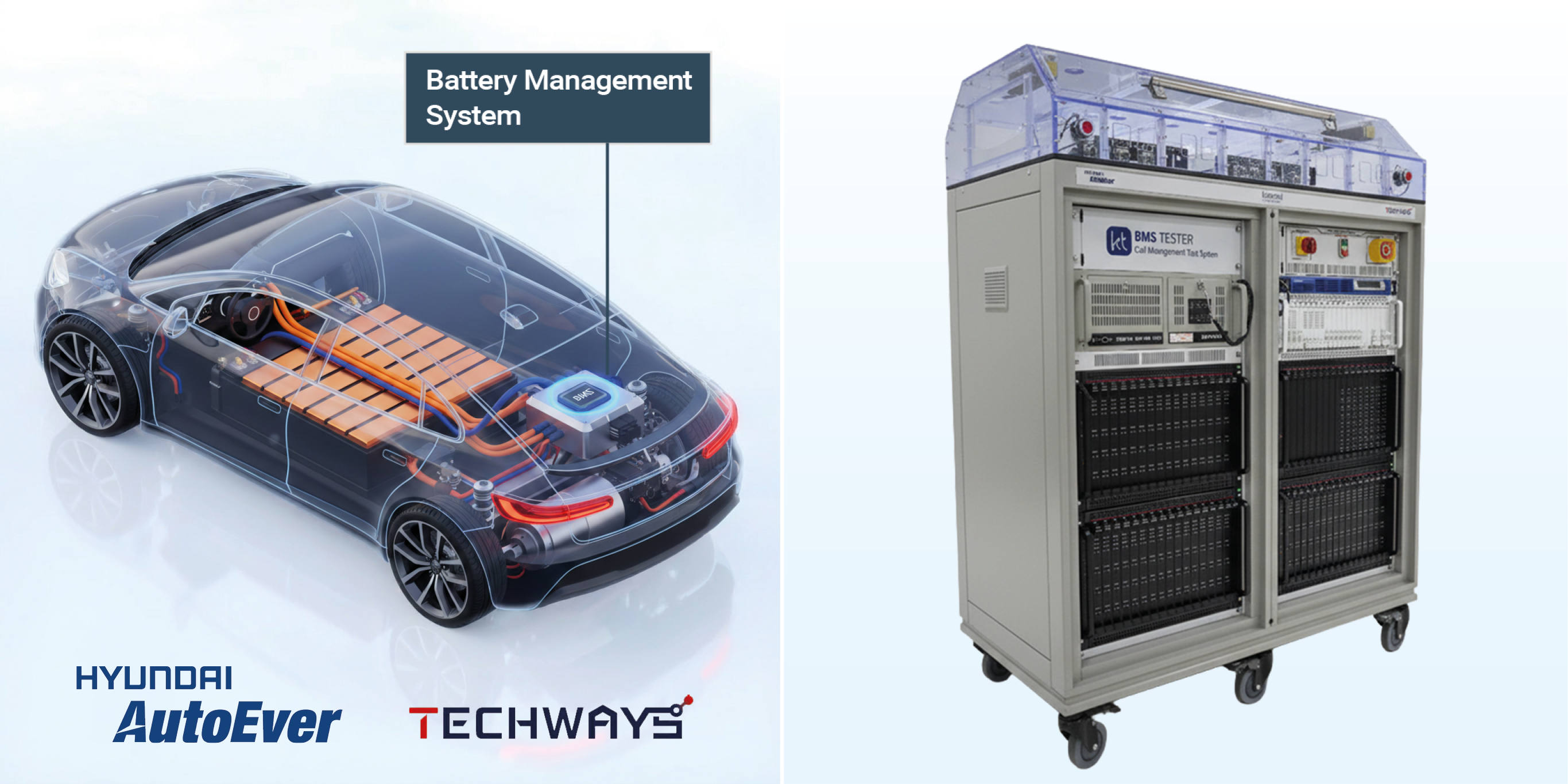

About the cooperation
The customer required a more reliable and efficient validation system for electric vehicle batteries that could meet tight project deadlines without frequent disruption. To this end, we implemented a specialised BMS Tester to validate ECU logic, cell monitoring and safety functions.

Project Scope
Challenges
- Frequent ECU software updates put immense pressure on validation teams to update and deploy test software in very short time frames.
- The system needed to be compatible with Hyundai AutoEver’s proprietary xStudio automation software and provide “last-mile” hardware validation.
Objectives
- The main goal was to lower overall expenses, automate processes to eliminate human error, and close the gap between hardware and virtual testing.

Solution
Konrad Technologies implemented the KT BMS Tester, a high-reliability hardware solution integrated with Techways.
Functions:
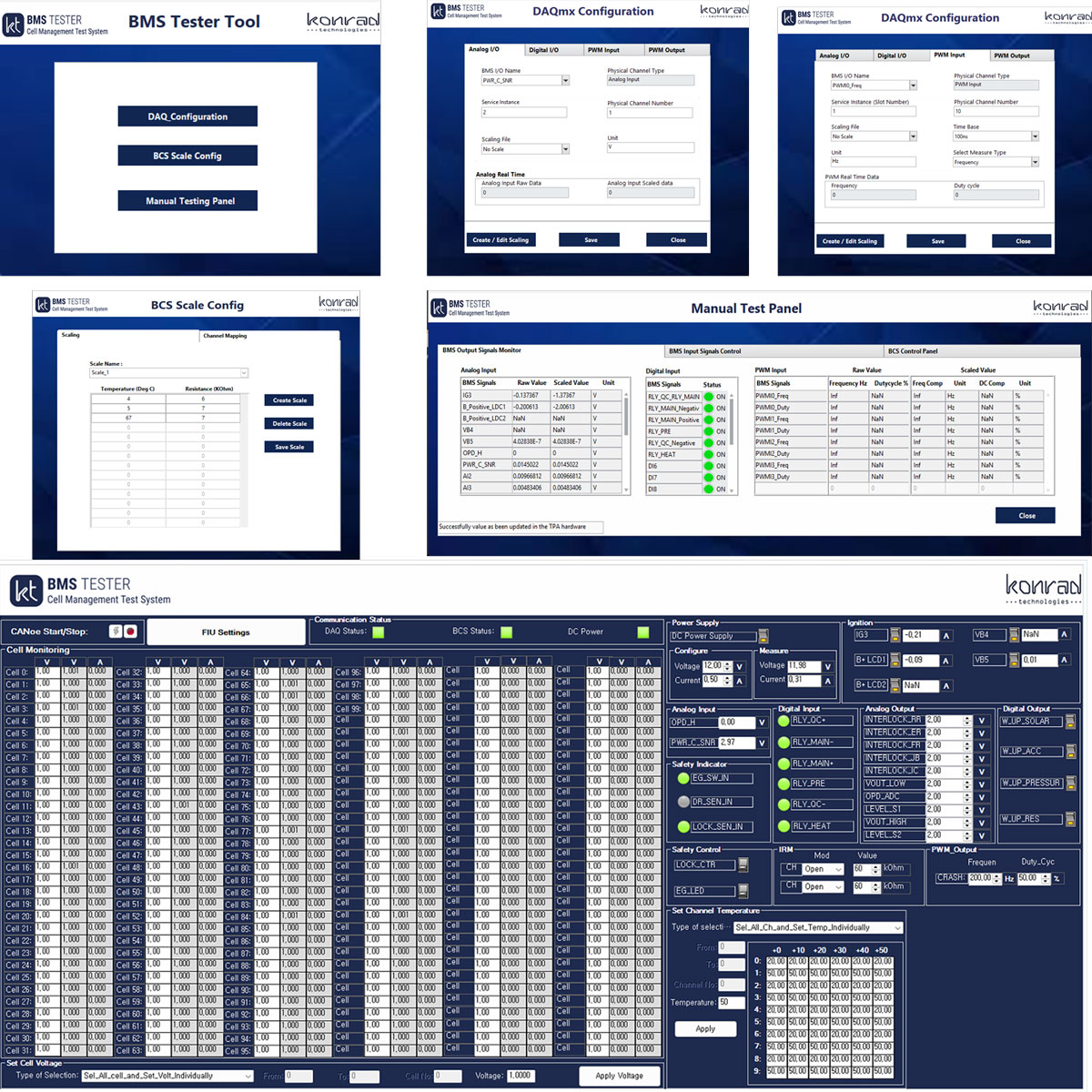
- Cell monitoring (Voltage, Current, Temp)
- State estimation (SoC, SoH, SoP)
- Safety protection (Short circuit, Over/Under-limits)
- Cell balancing and fault logging
Hardware:
- PXI-based measurement, 192-cell simulators (0-5V), and isolation registers (20kΩ – 5.1MΩ)
Software:
- Network simulation and Hyundai AutoEver’s xStudio for automation
Applied test procedures:
- Hardware-in-the-Loop (HIL) simulation
- Fault injection (FIU)
- Manual validation via a dedicated UI
Challenges during implementation and solution:
The transition to Software Defined Vehicle (SDV) testing required complex integration of virtual and physical nodes, resolved through seamless “plug-and-play” IO integration with customer network configurations.


Customer Benefit
From this solution the customer gained streamlined workflows and the elimination of redundant steps in the test run and deployment process.
Measureable improvement:
- A 50 % reduction in test time, significantly enhancing efficiency and enabling the team to meet demanding ECU validation schedules.
- Openness of the tester platform to integrate solutions from technology partners e.g. Hyundai Autoever and Techways

Our know-how for project implementation
Strengths that contributed most to the success of this project:
- Hardware Reliability: Providing a stable platform that reduced system downtime.
- Ecosystem Collaboration: The strategic partnership between Konrad Technologies and Techways (Korean partner) provided localized, high-precision expertise.
Key insights and best practices gained from this project:
- Automation is critical not just for speed, but for maintaining system longevity and reducing human-induced errors in high-voltage environments.
Request Case Study as PDF
Download the case study as a PDF for easy offline access to valuable insights that you can refer to whenever you need them!
your project!
Let us know what you're working on and how we can help you get there through our long term experience in large high tech projects.
Get in touch